
The recent death of Lord Snowdon reminded me of the night some 55 years ago when I shared a bottle of whisky with Princess Margaret.
I was a 21 year old student at the University of Keele where HRH was Chancellor.
She was ten years older than me; a woman of the world, while I was an innocent wet-behind-the-ears country boy from the wilds of Cumberland.
So it was hardly surprising that I should be so easily led astray.
The university – then in its infancy – was centred on Keele Hall; the magnificent Victorian pile built by the Sneyd family from the profits from their coal mines in nearby Silverdale.
As I had been brought up at Highmoor Mansions Wigton with its magnifent tower and gardens, it was something of a home from home, though I should explain that, when we lived at Highmoor, it had been converted into 14 rather grotty flats – No 7 which we occupied had previously been the garage, so it was probably even grottyier than the rest.
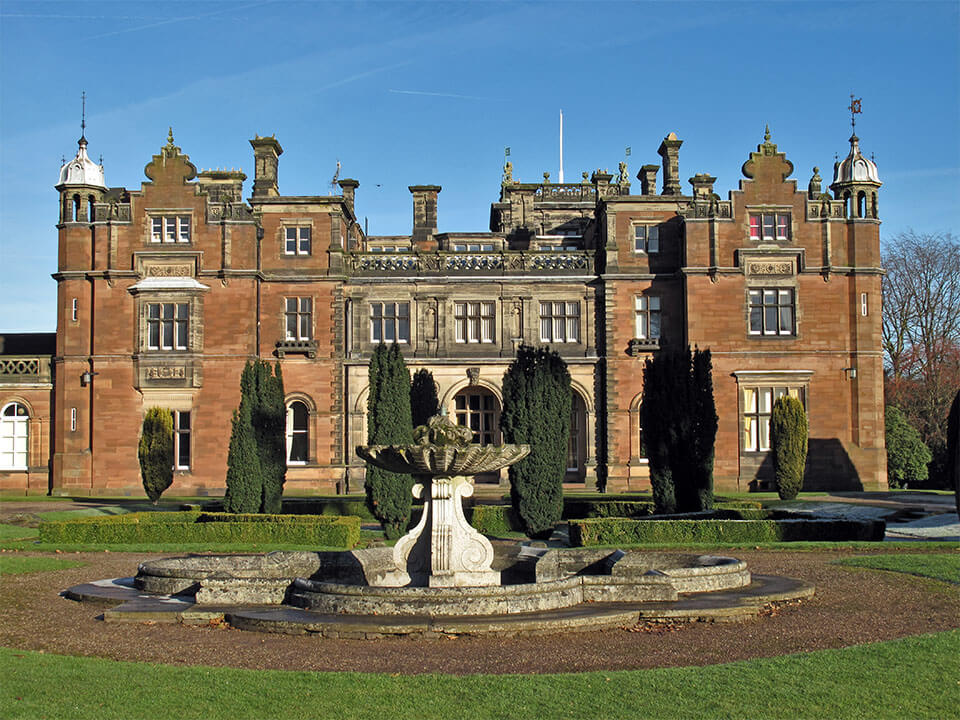
Every year, there was Royal Ball in Keele Hall at which the princess and her entourage were the guests of honour.
There was much competition for the plum jobs serving on the bars at this event, not least because the fiver it yielded was a small fortune – beer being two bob a pint (ten for a pound).
I applied, and was delighted when Bob Griffin the students union social secretary informed me that I had landed the plummiest job of all – guardian of the bottle of specially blended Haig Dimple (Margaret’s favourite tipple) and the packet of Passing Clouds – her cigarettes of choice.
Passing Clouds, which were made from the very finest tobacco, came in a pink packet and were an unusual oval shape.
They were, of course, way beyond the reach of an impoverished student’s pocket.
Specially blended Haig Dimple was, and still is, ruinously expensive.
There was a multiplicity of bars for the Royal Ball, but being short of cash the students’ union could only afford a single bottle of the liquid gold and my role was to make sure that it, and the superior fags, preceded the Royal party as they made their way from one bar to the next.
So, when one of her flunkies announced that the party’s next stop was to be the bar in the upstairs drawing room, my task was to make sure the booze and fags were waiting for them when they reached their specified watering hole.
While the Royal Party processed in stately fashion up the elegent main staircase, I had to leg it up what had been the servants’ backstairs route to get there before them.
As it was almost twice as far, I had to get a shift on, as they say in my native Cumberland.
I like to think that I got this job because of my fleetness of foot – I played in the centre and was a member of the athletics’ team 4 x 100 yds relay squad – so running up and down stairs at speed was well within my skill set.
However, there may be a another less honourable explanation – my later experience as an investigative newspaper reporter leads me to believe that there usually is – and in this case it involves the close relationship between my position as captain of the rugby team and the fact that Bob Griffin was student union social secretary.
As captain, I was the sole selector for the rugby team – as social secretary, Bob had complete control over the staffing arrangements for the Royal Ball.
Bob was a wing forward – a position for which there was cut-throat competition.
And, as Lord Acton famously said:
“All power corrupts,
Absolute power corrupts absolutely.”
Anyway, when the dancing stopped, I was left with a quarter of a bottle of Dimple (my share) and an almost complete packet of Passing Clouds.
One corner of the ballroom was filled with potted palm trees and other greenery and it was here that I retired with the booty.
When I came to in the morning (awoke wouldn’t quite describe it) still wearing my little white waiter’s jacket, I heard a rustling noise coming from the palms.
I slowly realised that, being indoors, it couldn’t be the wind and it eventually dawned on me that the cause of the disturbance was a group of workmen who were loading up the plants for return to the garden centre.
I shoved the, now, empty bottle into one of the plant pots and made my escape.
That Sunday afternoon’s bridge school had an unusual air of opulence as we drew deeply on the Passing Clouds which, as I recall, were somewhat easier on the throat than our usual Woodbines and Park Drive.
This was not the first time I had encountered corruption in the rugby selection process.
When I was at school, there was a three person selection committee made up of the games master, Jimmy Morton; my great friend Jeff Edgar, who was captain; and myself as vice-captain.
I should say that, in those days, the Nelson Thomlinson School – a grammar school in Wigton – was one of the top rugby playing schools in the north of England, which, in the seven years I was there, produced five England schoolboy internationals and any number of final trialists.
Considering that it was quite a small school (about 200 boys) serving the towns of Wigton, Silloth and Aspatria (think Pembroke and two Neylands) this was a tribute to Jimmy’s coaching skills.
Selection committee met following Wednesday afternoon games and, as we had a fairly settled team, it was usually a routine business.
Then one day Jimmy dropped a bombshell by suggesting we should pick Melvyn ahead of Jeff Wood at prop.
Jeff and I insisted that Jeff Wood was a far better player than Melvyn and faced with the prospect of being outvoted Jimmy had to come clean.
The head had asked that Melvyn be selected, he explained.
He was applying for Oxford and the Head thought it would look good on his application form (CVs were for the future) if he could claim membership of the school’s prestigious first XV.
So, Melvyn got the nod.
The Head was a Methodist preacher so he couldn’t countenance the appearance of a lie on the application form, though he had no problem with corrupting the selection process in order to create a convenient truth.
Melvyn won his place at Oxford, though I doubt his rugby playing pedigree was the deciding factor, and the rest, as they say, is history.